
How to Keep Your RV Cool in the Summer Heat
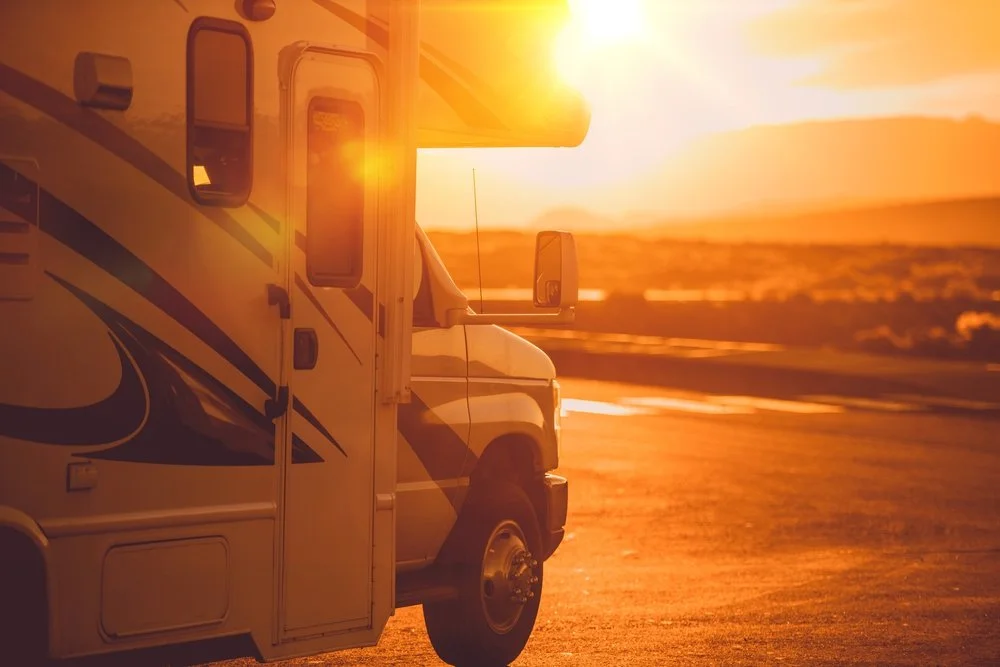
Summer travel through Florida and the South means one thing for RVers: heat. A rig sitting in full sun can climb 15 to 20 degrees above the outside temperature, and the outside temperature in July is already plenty. Keeping the inside livable is part comfort, part protecting your batteries, electronics, and pets.
The good news is you have options at every budget. Below are three tiers: what you can do this weekend for little or no money, what a few hundred dollars buys you, and what a serious investment looks like. Start at the top and work down only as far as you need to.
DIY and low-cost options ($0 to $75)
Most of the heat problem is the sun getting in and hot air staying in. You can knock down both without spending much.
Start with the air conditioner you already have. Before you buy anything, make sure your AC is running at full strength. Pull the interior filter and wash it — a clogged filter is the most common reason a rooftop unit can't keep up, and cleaning it costs nothing. Do it every couple of weeks in heavy summer use. Once a season, cut the power, take the shroud off the roof unit, and gently clean the coil fins with a soft brush and a can of coil cleaner ($8 to $12), straightening any bent fins with a fin comb. Clear leaves and debris off the top and make sure the drain holes are open. A clean unit pulls the inside temperature down noticeably further than a dirty one on the same power.
Block the windows. Windows are the biggest source of heat gain. Reflective foil panels (Reflectix runs about $20 to $30 a roll) cut to fit your windows will reflect a large share of it back out. A folding windshield sunshade for the cab, $15 to $25, handles the biggest single piece of glass on a motorhome. Keep your blinds and day/night shades closed on the sunny side.
Point the rig the right way. When you pull in, angle the RV so the long side and the biggest windows face away from the afternoon sun, and put any natural shade on the west side. A few degrees of orientation is free and makes a real difference by evening.
Move your heat outside. Cooking, especially the oven and stovetop, dumps heat into a small space. Use an outdoor griddle, a grill, or an electric skillet under the awning instead. Swap any remaining incandescent bulbs for LEDs, which run cool and pull less power.
Work the air. Open roof vents and run a couple of 12-volt or USB fans to keep air moving; moving air feels several degrees cooler than still air. In the early morning and after sunset, open everything up and flush the hot air out while it's cool. A cheap box fan in a window, $20, pushes a lot of air for the money.
Cool the roof directly. The roof takes the most direct sun and radiates that heat straight down into the rig. A simple misting setup — a misting kit or a low-flow lawn sprinkler laid on the roof, $15 to $40 at any hardware store, run off your hose — wets the roof, and as the water evaporates it pulls heat away. Run it in short bursts during the hottest part of the afternoon rather than constantly. It works best in drier heat and it uses water, so it's a full-hookup-site trick, not a boondocking one. Check that your roof seals and vents are in good shape first so you aren't driving water where it doesn't belong.
Deploy the awning and dry the air. Your awning shades the wall and windows beneath it. And because humidity makes heat feel worse, a small dehumidifier or even running the fan on your existing AC helps the space feel cooler than the thermometer says.
Mid-tier, medium-cost solutions ($150 to $1,000)
When the basics aren't enough, this is where you make the rig itself work better.
Upgrade the roof ventilation. A powered roof vent fan like a Maxxair or Fan-Tastic Vent, roughly $200 to $400 installed, pulls hot air out far faster than a passive vent. Run it on exhaust and it pulls cooler air in through a shaded window on the other end.
Add reflective window film or better shades. Professional-grade window tint or ceramic film cuts heat gain without blocking all your light. Insulated day/night shades, $30 to $60 per window, do double duty in summer and winter.
Get a portable AC or evaporative cooler. A portable air conditioner, $300 to $600, adds cooling to a bedroom or a rig without enough rooftop capacity. In dry climates an evaporative (swamp) cooler is cheaper to run, though it does less in Florida humidity.
Install a soft start on your air conditioner. A soft-start device, around $300, lowers the surge your rooftop AC draws at startup. That lets it run more reliably on a 30-amp pedestal or a modest generator, and it's easier on the compressor.
Shade the sunny side. A sun-shade screen or awning panel that hangs off the awning, $50 to $150, blocks the low afternoon sun that sneaks in under a standard awning. Tire covers, $30 to $60 a set, keep your tires and wheel wells cooler and protect the rubber.
Top-tier, higher-cost options ($1,500 and up)
If you spend serious time in your rig in summer, or you're a full-timer, it can be worth solving the heat at the source.
Add or upgrade the air conditioning. A second rooftop unit, or replacing a tired 13,500 BTU unit with a 15,000 BTU ducted system, runs $1,500 to $3,500 installed and is the most direct fix for a rig that just can't keep up. Heat-pump units cost more but earn their keep in the shoulder seasons.
Go with a residential-style mini-split. A 12-volt or inverter mini-split system (Nomadic Cooling, RecPro, and similar) is quiet, efficient, and can run off battery. Expect $2,000 to $4,000 and up with installation, more if you're running it off-grid.
Improve the insulation and roof. Adding spray foam or rigid insulation during a remodel, a reflective roof coating, or an upgraded reflective membrane keeps heat out year after year. Coatings run a few hundred dollars in materials; a professional reflective roof is more, but it's a one-time job that lowers your cooling load permanently.
Build out solar and lithium to run AC unplugged. A large solar array with lithium batteries and a capable inverter, $5,000 to $15,000 depending on size, lets you run a mini-split or a soft-start rooftop unit without shore power or a running generator. This is a full-timer or boondocker investment, not a stopover one.
Stay cool out there.