
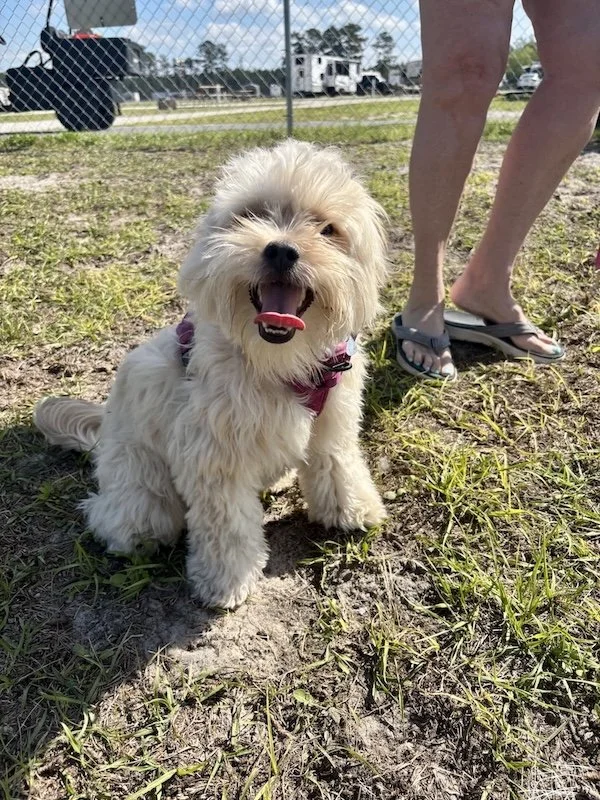
A lot of RVers travel with a dog. For them, an overnight stop has to work for two: the driver who needs to plug in and rest, and the dog who has been riding for 300 miles and needs to get out and move. "Pet-friendly" on a listing doesn't always mean much. Sometimes it means a strip of grass next to the dump station. This post covers practical tips for traveling with dogs in an RV, how to handle rest stops, and what to look for in a pet-friendly RV park along I-75.
Before you leave: paperwork and supplies
A little preparation at home saves a lot of trouble on the road.
Carry vaccination records. Keep a paper copy of your dog's rabies certificate and recent shot records in the rig, and a photo of each on your phone. Some campgrounds ask for proof, and any emergency vet will want it.
Check the microchip and tag. Make sure the microchip is registered with your current cell number, and put that same number on a tag on the collar. A dog that bolts at an unfamiliar rest area is one of the most common ways dogs go missing on the road.
Keep prevention current. Flea, tick, and heartworm prevention matters more when you travel. In Florida, mosquitoes and ticks are active most of the year, not just in summer.
Pack food and water from home. Bring enough of your dog's regular food for the whole trip plus a few extra days. Switching food on the road is a common cause of stomach trouble. A couple of gallons of water from home helps for the first days, too, since a change in water upsets some dogs.
Find emergency vets on your route. Before you leave, look up a 24-hour vet near each overnight stop and save the numbers. You won't want to be searching for one at 10 p.m. in a town you don't know.
In the rig: riding safely
Secure your dog while moving. Use a crash-tested harness clipped to a seat belt, or a crate that is strapped down. A loose dog in a motorhome is a distraction for the driver and a projectile in a hard stop.
Never let a dog ride in a towed trailer or 5th wheel. There's no way to watch the temperature, the ride is rough, and you won't know if something goes wrong until you stop.
Watch the sun through the windows. A crate parked in direct sun next to a window can get hot even with the dash air running. Move it or shade the glass.
Heat is the biggest risk
If you travel through Florida or the Deep South, heat is the thing to plan around. The inside of a parked rig climbs fast if the air conditioner trips a breaker or the pedestal loses power.
Use a temperature monitor. If your dog stays in the rig while you run an errand, leave the AC on and use a remote temperature monitor that texts you when it gets too warm. Most cellular units run about $50 to $150, plus a small monthly plan. That's cheap insurance.
Know your power. A 30-amp site will run one rooftop air conditioner fine, but add a microwave or an electric water heater and you can trip the breaker. Plan for that before you leave the dog alone, not after.
Check the pavement. Asphalt in full sun can run well over 120 degrees on a 90-degree day. Put the back of your hand on it. If you can't hold it there for seven seconds, it's too hot for paws. Walk on grass.
Walk early and late. In summer, do the long walks in the morning and after sunset. Keep midday breaks short.
Rest-stop etiquette with a dog
Interstate rest areas are shared space, and a little courtesy goes a long way.
Stop every two to three hours. Your dog needs a break about as often as you do.
Leash up before the door opens. Clip the leash on inside the rig. Rest areas sit right next to interstate traffic, and a startled dog can be on the shoulder in seconds.
Use the pet area. Most interstate rest areas have a marked pet walk area. Use it, and keep dogs away from picnic tables and building entrances.
Pick up every time. Keep bags in the door pocket of the rig and a spare roll in the tow vehicle.
Give other dogs room. Many dogs at a rest area are stressed from travel. Ask before letting dogs meet, or just keep moving.
Keep it short. Water, a walk, and back on the road. Ten to fifteen minutes is usually enough.
Campground manners
The same courtesy applies once you're parked for the night.
Keep your dog leashed outside your site, except in a designated off-leash area.
Don't leave a dog tied outside unattended. Heat, passing dogs, and barking all become problems fast.
If your dog barks when you leave, close the shades, leave a fan or radio on, and keep your time away short. In a transient park, your neighbors are often turning in early for a morning start.
Pick up at your site and on every walk.
What to look for in a pet-friendly RV park
When you're choosing an overnight stop with a dog, a few things matter more than the word "pet-friendly" on a listing.
A real place for the dog to run. A dog that has been riding all day needs more than a quick lap around the site. A dedicated dog park lets your dog burn off energy so everyone sleeps better.
Separate areas for large and small dogs. A 12-pound dog and an 80-pound dog playing together can go wrong quickly, even when both are friendly. Separate parks let small dogs relax and big dogs actually run.
Easy access from the interstate. Every extra mile of side roads is more time your dog spends cooped up in the rig.
Full hookups. Reliable electric means you can keep the air conditioner running for your dog all night.
Pull-through sites. No backing in means a faster setup, and your dog is out of the rig sooner.
A clear pet policy. Ask about pet fees, the number of dogs allowed, and any breed rules before you book, not at the gate.
Why pet owners stop at Sharrah's RV Park
Sharrah's RV Park is a 44-site transient park at I-75 Exit 427 in Lake City, Florida, at the I-75 / I-10 junction. You're off the interstate and parked in a few minutes.
We have two dog parks: one for large breeds and one for small breeds. Your dog can stretch out after a long day on the road without sharing the space with dogs twice or half its size.
For the people in the rig, there's a birdwatching area. It's a quiet place to sit with a cup of coffee in the morning before you get back on the road. North Florida sees a steady stream of migrating birds in spring and fall, along with plenty of year-round residents.
The rest is what a good stopover should be. Full-hookup pull-through sites built for big rigs, so you can keep the AC running for your dog all night. WiFi at every site. A security gate. Booking is contactless, so there's no check-in desk to beat if you roll in late. There's a 24-hour Circle K next door for fuel and coffee on the way out.
If you're traveling I-75 with a dog, it's an easy place to break the drive. You can see sites, rates, availability, and our pet policy at www.sharrahsrvpark.com.